Qatar recently thwarted more than 5.1 million cyberattacks. Your business could be next on the target list. But how do you get SOC 2 compliance to protect your operations? What does achieving SOC 2 certification in Qatar actually involve?
The answer is simpler than you think. You need six clear steps to achieve SOC 2 compliance in Qatar. First, determine which Trust Services Criteria apply to you. Second, conduct a thorough gap analysis of current controls. Third, implement both technical and administrative security controls. Fourth, develop comprehensive documentation and policy frameworks. Fifth, engage an AICPA standards-certified auditor with regional experience. Sixth, undergo the audit process and receive your attestation.
This guide not only explains how to get SOC 2 compliance in Qatar but also shares Qatar-specific insights from real enforcement cases. You’ll discover realistic timelines and cost breakdowns. Most importantly, you’ll learn from local examples. Let’s dive into your compliance journey starting now.
Contact Qualitas Consulting for tailored SOC 2 solutions in Qatar.
What is SOC 2 Compliance and Why Qatar Businesses Need It
SOC 2 compliance refers to an attestation report, not certification. Many people get this confused from the start. The American Institute of Certified Public Accountants (AICPA) created this framework. It evaluates how service organizations handle customer data protection.
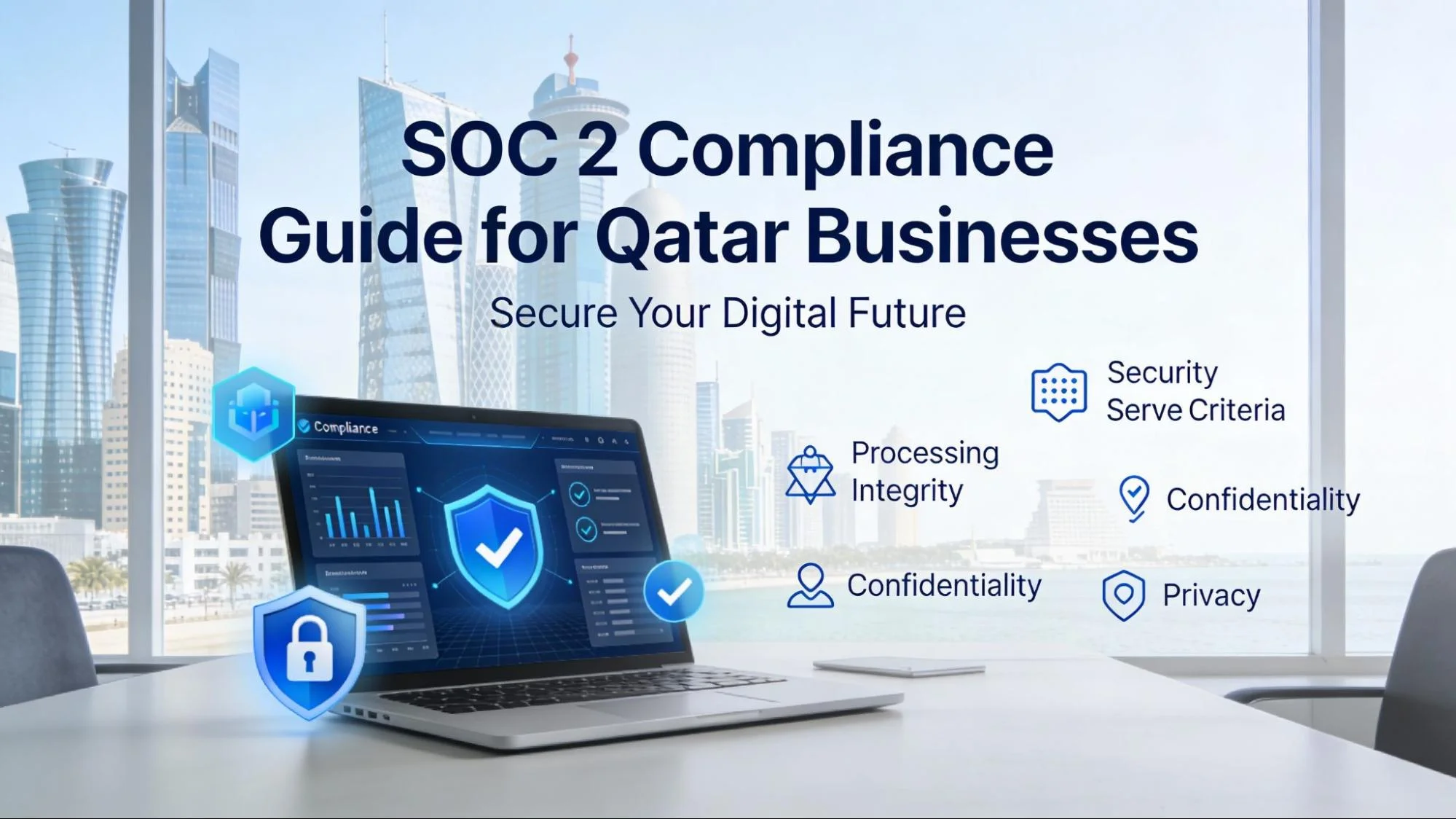
The SOC 2 full form is Service Organization Control 2. It focuses on five Trust service principles:
- Security
- Availability
- Processing Integrity
- Confidentiality
- Privacy
Security is mandatory for every organization seeking compliance. The other four depend on your business operations.
Not sure which Trust Services Criteria your business needs? Get a Free SOC 2 Readiness Assessment from our Qatar compliance experts.
Qatar businesses face mounting pressure to achieve SOC 2 certification. Your international clients demand proof of robust data security standards. The local tech sector is exploding with growth. Fintech companies need competitive advantages in crowded markets.
Here’s a compelling statistic: 45% of companies with over $100 million in funding already have SOC 2 attestation.
The stakes keep rising in our region. Remember the Qatar Living breach in March 2024? Hackers exposed massive user databases on dark web forums. That incident shows why information security measures matter desperately.
The NCSA now oversees compliance across critical infrastructure sectors. Your business can’t afford to lag behind anymore.
How Do You Get SOC 2 Compliance in Qatar
Achieving SOC 2 compliance in Qatar follows a structured six-phase approach.
- First you’ll define your scope and select appropriate criteria.
- Next comes conducting a thorough gap analysis and implementing controls.
- Documentation development and auditor selection follow after that.
- Finally, you’ll undergo the formal audit process itself.
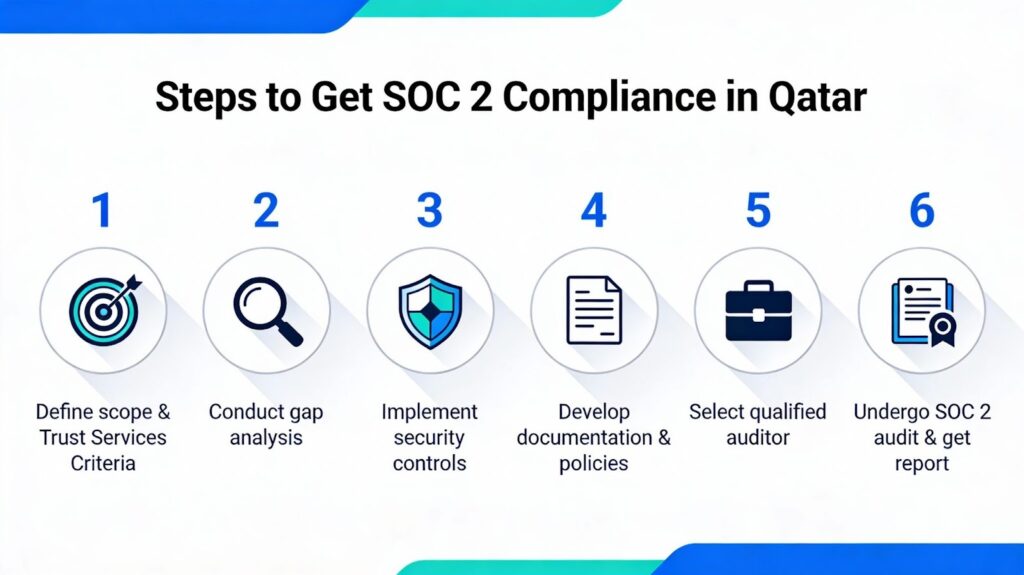
Each phase builds upon the previous one systematically. Let’s explore these steps to get SOC 2 Certified in Qatar with actionable details you can implement immediately.
Step 1: Scope Definition and TSC Selection
Start by mapping your business activities carefully. Which Trust Services Criteria align with your operations? Security is non-negotiable for everyone seeking SOC 2 compliance in Qatar. Add Availability if you run cloud infrastructure. Include Confidentiality when handling proprietary client information.
Your industry often determines the right combination. E-commerce platforms need Security and Availability minimally. Financial services typically require all five criteria. Review your client contracts for specific requirements. Many international partners explicitly demand SOC 2 Type 2 reports.
Step 2: Conduct a Comprehensive Gap Analysis
Evaluate your current security posture against the SOC 2 framework requirements. This readiness assessment identifies control deficiencies before auditors arrive. You’ll discover which policies need immediate development. Technical controls often require significant time for implementation.
Here’s an eye-opening fact: 58% of organizations now conduct four or more compliance audits annually. That means preparation matters more than ever before. The NCSA’s national cyber drills set high expectations. Qatar’s 170 key organizations already undergo rigorous testing. Your gap analysis should measure against these standards.
Bring in external consultants for objective assessments. Internal teams miss blind spots that auditors catch. Document every finding with remediation timelines and ownership.
Step 3: Implement Technical and Administrative Controls
Control implementation happens across two distinct categories simultaneously.
Administrative Controls You Need:
- Employee onboarding procedures with background verification steps
- Clear offboarding protocols that revoke access immediately
- Physical security measures for data centers and offices
- Comprehensive security protocols documentation
- Regular staff training on data security standards
Technical Security Controls to Deploy:
- Role-based access control mechanisms restricting unauthorized access
- Multi-factor authentication across all critical systems
- End-to-end encryption for data at rest and transit
- Continuous monitoring systems with real-time alerting
- Cloud security controls for hybrid infrastructure environments
- Regular vulnerability scanning and penetration testing schedules
Struggling with control implementation? Explore Our ISO 27001 Services– many controls overlap with SOC 2 requirements.
Step 4: Documentation and Policy Development
Create a comprehensive SOC 2 compliance checklist documentation covering everything. Your policies need clear language that employees understand. Avoid technical jargon that confuses non-technical staff members.
Essential policies for your audit preparation include:
- Incident response procedures with clear escalation paths
- Data classification frameworks defining sensitivity levels
- Vendor management policies for third-party risk assessment
- Change management procedures for system modifications
- Business continuity and disaster recovery plans
The QFC firm specifically failed on incident response. They couldn’t demonstrate proper notification procedures during breaches. Your documentation proves you’ve thought through every scenario.
Step 5: Select a Qualified Auditing Firm
You need a SOC 2 CPA with proper AICPA standards certification. Not every accounting firm qualifies to perform these audits. Check their credentials carefully before signing engagement letters.
Look for auditors with Middle East experience specifically. They understand Qatar’s business environment and regulatory context. Coordinate timelines accounting for local business hours and holidays. The typical SOC 2 audit duration runs 4-6 weeks. Plan evidence submission schedules that don’t disrupt operations.
Qualified auditing firms should provide clear deliverable timelines upfront. Ask about their approach to findings and remediation. Understand their communication style and availability for questions.
Looking for qualified SOC 2 auditors in Qatar? Let the Qualitas Connect You with our network of AICPA-certified partners.
Step 6: Undergo the Audit Process
Submit the requested evidence according to your auditor’s schedule. They’ll review policies, interview staff, and test controls. Be prepared for thorough technical system examinations.
Address identified gaps promptly during the compliance evaluation phase. Auditors distinguish between significant findings and minor observations. Significant issues might delay your attestation report issuance.
The final SOC 2 report comes in two varieties. Unqualified opinions mean you passed all requirements successfully. Qualified opinions note exceptions where controls weren’t effective. Obviously, you want that clean unqualified opinion.
SOC 2 Type 1 vs. Type II: Which Does Your Qatar Business Need?
Understanding the difference matters for planning your certification path.
| Aspect | SOC 2 Type 1 | SOC 2 Type 2 |
| Timeline | 3-6 months | 6-12 months |
| Assessment Scope | Point-in-time snapshot | Operating effectiveness over time |
| Cost Range | $15,000-$30,000 | $30,000-$60,000 |
| Ideal For | Startups, initial compliance | Established enterprises |
| Monitoring Period | Single assessment date | 3-12 months continuous |
| Client Preference | Early-stage validation | Enterprise contract requirement |
SOC 2 Type 1 provides a point-in-time audit snapshot. Auditors verify that your controls exist and seem properly designed. They don’t test whether controls actually work consistently.
How to get a SOC 2 type 2 report requires demonstrating sustained effectiveness. Auditors monitor your controls over 3-12 months typically. They verify consistent operation through that entire period. Most enterprise clients won’t accept Type 1 anymore.
Qatar’s market increasingly demands SOC 2 Type 2 reports specifically. International partners need proof of ongoing operational integrity. Start with Type 1 if budget constrains you. Upgrade to Type 2 within your next reporting cycle.
Timeline and Cost Breakdown for Qatar Businesses
How Long Does SOC 2 Certification Take?
- SOC 2 Type 1: 3-6 months from initiation to report
- SOC 2 Type 2: 6-12 months including monitoring period
- Gap remediation: 2-4 months typically before audit
- Audit fieldwork: 4-6 weeks for evidence review
- Report issuance: 2-3 weeks after fieldwork completion
Your timeline depends on current security maturity levels. Organizations with existing ISO 27001 frameworks move faster. Starting from scratch takes the full duration.
How Much Does SOC 2 Compliance Cost?
Global averages run $20,000-$50,000 for complete certification. Qatar businesses face additional considerations though.
- Auditor coordination and potential travel costs
- Technology infrastructure investments for cloud security controls
- SOC 2 compliance consulting fees from local experts
- Staff training programs on industry best practices
- Ongoing monitoring tool subscriptions for evidence collection
Consider the ROI perspective carefully here. That QFC firm paid $150,000 in penalties alone. They still had to fix their systems afterwards. Prevention costs far less than remediation and reputational damage.
Here’s another compelling number: 92%of organizations conduct multiple audits yearly. Budget for recurring annual costs, not one-time expenses.
Common Challenges Qatar Businesses Face (And How to Overcome Them)
Resource Constraints Hit Small Teams Hard
- Challenge: Limited IT staff juggling compliance with operations
- Solution: Leverage compliance automation platforms for evidence collection
- Deploy tools that continuously monitor and document controls
Documentation Gaps Slow Progress Significantly
- Challenge: Missing policies and procedures from historical operations
- Solution: Start policy development early in your planning
- Use templates but customize them for actual practices
Staff Awareness Remains Inconsistent Across Departments
- Challenge: Employees don’t understand their security controls responsibilities
- Solution: Implement comprehensive training programs immediately
- Your staff needs similar readiness and awareness
Vendor Management Creates Blind Spots
- Challenge: Third-party services introduce uncontrolled risks
- Solution: Develop robust third-party risk assessment protocols
- Require vendors to share their own SOC 2 attestation reports
Continuous Monitoring Demands Constant Attention
- Challenge: Maintaining compliance requires ongoing effort and vigilance
- Solution: Automate evidence collection wherever technology allows
- Schedule regular internal audits quarterly between external assessments
Finding Qualified Auditors Takes Unexpected Time
- Challenge: Limited AICPA standards-certified firms operate in the Middle East
- Solution: Work with consultancies like Qualitas maintaining auditor networks
- Plan engagement discussions 3-4 months before the desired start
The Qatar Compliance Landscape: What You Must Know
Qatar’s regulatory environment is evolving rapidly around cybersecurity. The NCSA actively monitors critical infrastructure across sectors. Their oversight continues expanding into more industries annually.
The QFC Data Protection Office demonstrates serious enforcement commitment. That December 2022 breach resulted in formal reprimands. The firm received a $150,000 financial penalty in September 2024. They had to completely revise their technical measures. Notification procedures required comprehensive overhauls as well.
Qatar data security expectations now mirror international standards closely. Your clients demand proof of robust customer data protection. International partnerships require demonstrable adherence to compliance standards. The reputation benefits extend beyond just checking boxes.
Qatar National Vision 2030 emphasizes digital transformation heavily. Smart city initiatives generate massive data collection requirements. Your business needs frameworks to handle this information responsibly. SOC 2 compliance in Qatar positions you as trustworthy.
Regional cybersecurity maturity is growing exponentially right now. Organizations previously ignoring these standards can’t anymore. The competitive landscape favors certified, compliant businesses overwhelmingly.
Ready to Begin Your SOC 2 Compliance Journey?
SOC 2 compliance isn’t just a checkbox exercise anymore. It’s essential business protection in Qatar’s evolving landscape. With 5.1 million cyber-attacks thwarted and penalties reaching $150,000, timing matters desperately.
Qualitas Consulting brings local expertise and international standards together seamlessly. Our team has guided numerous Qatar businesses through successful certifications. We handle everything from initial gap analysis to final attestation report delivery.
Don’t navigate this complex audit process alone without guidance. Contact Qualitas Consulting today for a complimentary readiness assessment. Discover how we can streamline your path to SOC 2 certification.
Let’s meet compliance requirements together while protecting your business. Your secure future starts with one conversation.