Under Qatar National Vision 2030, businesses are expected to improve environmental performance and demonstrate responsible operations, particularly if they are pursuing major contracts and stronger ICV readiness. Globally, over 676,000 organizations hold valid ISO 14001 certificates as of 2024.
Together, ISO 14001, ISO 14067, and ISO 50001 give Qatari businesses a practical path to sustainable business growth and stronger ICV readiness. Qualitas Consulting, an established ISO advisory firm in Qatar, helps organizations apply these standards effectively.
Why Sustainability Is Becoming a Competitive Advantage in Qatar
Sustainability is no longer a side project in Qatar. It has become part of how business is done.
- Qatar National Vision 2030 places environmental development among its four main pillars, pushing organizations to balance economic growth with resource protection.
- ESG expectations are rising fast, as investors, banks, and large clients now ask for proof of environmental, social, and governance performance before signing contracts.
- Energy efficiency matters more than ever, since Qatar’s industrial and construction sectors consume large amounts of power, and energy costs directly affect profit margins.
- Environmental responsibility is now a public expectation, not just a regulatory one, as communities and government bodies pay closer attention to emissions, waste, and resource use.
- Procurement expectations have shifted, with many tenders and supplier evaluations now including sustainability and compliance criteria alongside price and quality.
- Business resilience improves when companies manage environmental risk properly, since it reduces exposure to fines, supply chain shocks, and reputational damage.
Together, these pressures mean that sustainable business practices in Qatar are becoming a genuine competitive advantage rather than an optional extra.
What Is the Relationship Between Sustainability and ICV?
This is where many businesses get confused, so it is worth being precise. In-Country Value (ICV) is an initiative under the Qatar Energy Tawteen Program that evaluates how much value a supplier creates within Qatar, covering local spend, Qatari employment, and local investment. Sustainability and ICV are related, but not the same thing.
- ICV evaluates local value creation, looking at factors like local procurement, workforce nationalization, and in-country investment through the ICV Scorecard.
- Sustainable operations improve operational maturity, which reflects positively on how well a company is run overall.
- Better management systems strengthen supplier credibility, since certified organizations can show documented, auditable processes to clients and partners.
- Efficient resource use supports long-term business performance, reducing waste and helping companies remain financially stable and competitive.
- Many organizations pursuing ICV also invest in internationally recognized management systems, because both efforts reflect the same underlying goal: building a mature, well-governed, and responsible business.
In short, ISO certification and ICV readiness in Qatar grow from the same root: operational excellence, even though they are measured through separate frameworks.
ISO 14001: Managing Environmental Performance
Many companies in Qatar struggle with unclear environmental responsibilities, inconsistent waste handling, and limited tracking of resource use. This creates compliance risk and inefficiency.
ISO 14001 certification in Qatar solves this by giving organizations a structured Environmental Management System (EMS). It sets out how to identify environmental risks, set measurable objectives, and monitor progress through regular audits and reviews. The standard covers everything from waste reduction strategies to environmental impact assessment and environmental risk management, embedding sustainability into everyday operations rather than treating it as an afterthought.
The business benefit is real: lower waste costs, reduced legal risk, and stronger environmental compliance in Qatar. From an ICV readiness perspective, an EMS shows procurement teams and major clients that a supplier manages operations responsibly, which builds trust and supports long-term supplier relationships.
ISO 14067: Measuring Product Carbon Footprints
Many businesses cannot answer a simple but increasingly common question: “What is the carbon footprint of our products?” Without this data, they cannot respond to client sustainability questionnaires or export requirements tied to carbon disclosure.
This is where ISO 14067 comes in. It offers a standardized way to calculate the carbon footprint of products across the whole product life cycle. It uses Life Cycle Assessment (LCA) principles to measure greenhouse gas (GHG) emissions from the extraction of raw materials to disposal. This carbon footprint certification provides companies with verified and comparable data, not just rough estimates.
The business value lies in transparency. Once a company understands its emissions, it can support sustainability reporting, respond confidently to ESG compliance requests, and identify opportunities for reducing carbon emissions. This directly enhances ESG reporting and establishes a business as a credible partner in sectors where carbon disclosure is becoming the norm, underpinning wider ICV preparedness in Qatar by showing environmental transparency to clients and regulators.
ISO 50001: Improving Energy Performance
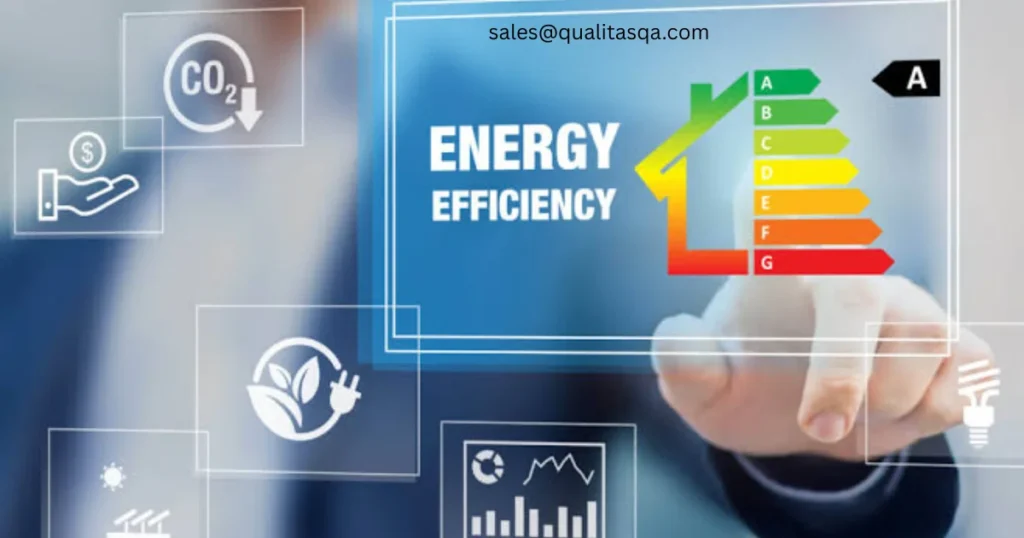
Energy waste is a hidden cost in many Qatari facilities, from oversized HVAC systems to unmonitored production equipment running longer than needed.
ISO 50001 certification addresses this directly. It requires organizations to establish an Energy Management System (EnMS) that starts with monitoring actual energy use, then moves toward optimization through data-driven decisions. This energy performance improvement process typically follows a clear path:
- Energy Waste – Unmonitored consumption across facilities and equipment.
- Monitoring – Installing tracking systems and setting energy baselines.
- Optimization – Identifying inefficiencies and improving processes.
- Cost Savings – Reducing utility bills through targeted improvements.
- Lower Emissions – Cutting the carbon footprint tied to energy use.
- Operational Excellence – Building a culture of continuous improvement.
This energy efficiency certification supports Qatar’s national decarbonization strategy while delivering a direct financial return, making it one of the most measurable ISO sustainability standards a business can adopt.
Why These Three Standards Are Stronger Together
Very few advisory firms explain how these standards connect, but this is where the real value lies. Each standard solves a different part of the sustainability puzzle.
| Business Goal | ISO Standard |
| Manage environmental impacts | ISO 14001 |
| Measure product carbon emissions | ISO 14067 |
| Improve energy efficiency | ISO 50001 |
When implemented together, these standards create a complete sustainability management system, not isolated, disconnected improvements. ISO 14001 gives the management framework, ISO 14067 gives the carbon data, and ISO 50001 gives the energy discipline necessary to reduce that carbon footprint. Together they provide a solid basis for net zero strategy and long-term carbon management, putting a business well ahead of the game in terms of basic environmental compliance.
Which Industries in Qatar Benefit Most?
Certain sectors in Qatar gain particularly strong value from adopting these ISO sustainability standards, including:
- Oil & Gas
- Construction
- Manufacturing
- Logistics
- Food & Beverage
- Healthcare
- Education
- Public Sector
- Energy & Utilities
- Retail & Warehousing
These industries face heavy regulatory scrutiny, high resource consumption, or growing client demand for verified sustainable business practices, making certification a natural next step for sustainable manufacturing and service delivery alike.
How Qualitas Consulting Helps Businesses Implement These Standards
Qualitas Consulting supports Qatari organizations through every stage of ISO implementation, offering:
- Gap Analysis – Identifying where current practices fall short of ISO requirements.
- System Development – Building EMS and EnMS documentation tailored to the business.
- ISO Implementation – Guiding practical rollout across departments and sites.
- Internal Audits – Testing readiness before external certification audits.
- Awareness Training – Educating staff on their role in sustainability goals.
- Lead Auditor Training – Developing internal audit capability.
- Certification Audit Support – Assisting during the formal certification process.
- Post-Certification Support – Maintaining compliance and driving continuous improvement.
As experienced ISO consultants in Qatar, Qualitas Consulting combines technical knowledge of environmental and energy management solutions with an understanding of the local business and regulatory context, making the certification journey more manageable for busy organizations.
Access complete ISO certification support, from gap analysis to audit, under one trusted roof.
A Note on ICV Claims
It is important to be accurate here. Unless Qatar’s official ICV methodology explicitly awards points for these specific ISO certifications, businesses should avoid claiming that certification directly “improves their ICV score.” A more honest and defensible position is this: these standards do not directly determine an organization’s ICV score, but they strengthen environmental performance, operational efficiency, governance, and sustainability practices, helping businesses become more competitive and better prepared for ICV-related supplier evaluations and procurement opportunities.
Final Thoughts
ISO 14001, ISO 14067, and ISO 50001 give Qatari businesses a practical, structured path toward genuine sustainability, not just paperwork. Together, they build a foundation for environmental compliance, carbon transparency, and energy efficiency that supports both business resilience and ICV readiness in Qatar.
Organizations that invest in these ISO management system certifications position themselves as credible, well-managed partners in an economy that increasingly rewards responsible operations. Qualitas Consulting is well-placed to guide that journey, from initial gap analysis through to certification and beyond.