What if audits could identify risks before they become costly problems? That shift is already happening. Across Qatar, businesses are moving beyond traditional annual reviews and embracing smarter, technology-enabled assurance practices. As digital transformation accelerates under Qatar National Vision 2030, auditing is evolving into a strategic function that supports governance, transparency, and long-term resilience.
According to the International Auditing and Assurance Standards Board (IAASB), technologies such as data analytics are reshaping audit quality and improving decision-making capabilities. Meanwhile, Qatar’s Digital Agenda 2030 continues to promote AI, cybersecurity, and advanced digital infrastructure across industries.
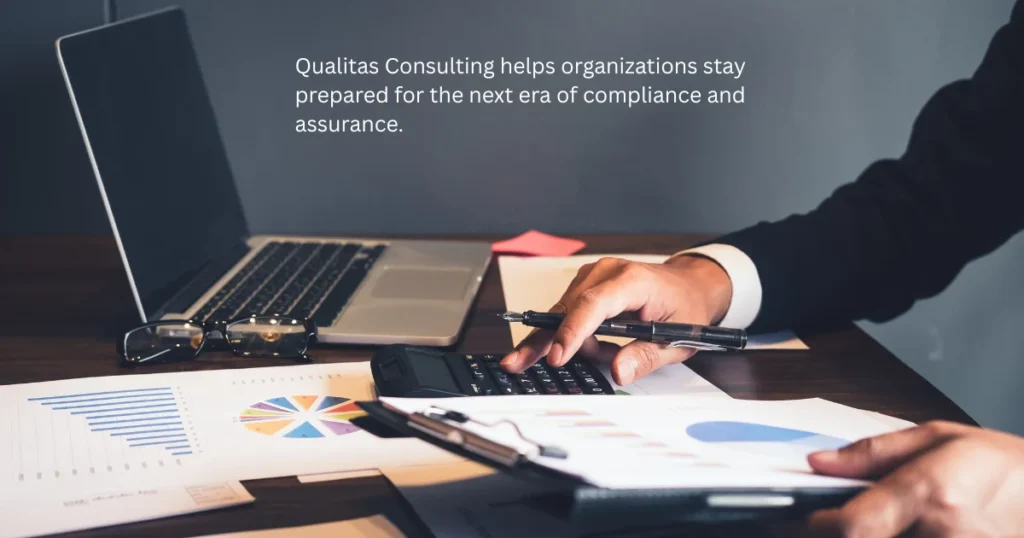
The future of audit is no longer a distant concept. It’s becoming a business imperative. In this guide, we take a look at five key trends that are impacting audits in Qatar and how Qualitas Consulting is helping organizations to be prepared for the next age of compliance and assurance.
Future of Audit in Qatar: Key Industry Transformation Overview
The audit profession is experiencing a significant transformation across Qatar. Businesses are not only relying on traditional audits which review past transactions and compliance records. Instead, organizations are looking for more meaningful insights to help them identify risks, improve operational efficiencies and strengthen governance. As digital technologies continue to evolve, the audit is becoming more proactive, data-driven and strategically focused.
The future of audit in Qatar is closely associated with technological innovation, regulatory developments and changing stakeholder expectations. Companies now demand more transparency, better controls and quicker access to reliable information. Meanwhile, the compliance requirements of Qatar’s financial reporting, taxation, cybersecurity and sustainability keep increasing.
The Qatar National Vision 2030 is encouraging businesses to invest in digital transformation initiatives for smarter governance and better decision-making. As a result, auditing services in Qatar are changing from traditional reviews to valuable business intelligence. The following trends highlight how the audit industry is adapting to meet the needs of modern organizations.
5 Key Industry Trends Defining the Future of Audit in Qatar
The audit landscape in Qatar is evolving rapidly due to digital transformation and heightened regulatory expectations. These five trends demonstrate the ways in which technology, governance and risk practices are redefining the audit standards of today.
1. Artificial Intelligence and Automation Reshaping Audit Practices in Qatar
Technology is revolutionizing how audits are performed. Organizations in all industries are applying artificial intelligence in auditing and audit automation to improve efficiency, accuracy, and compliance monitoring.
AI-Driven Audit Testing
Traditional audits often include sample based testing. AI-powered systems, however, can scan an entire data set in minutes. This enables auditors to identify anomalies, unusual transactions and potential failures in controls more effectively. Businesses benefit from speedier assessments and better audit quality.
Automation of Compliance Checks
Compliance reviews can be expensive and time consuming if done manually. Today, automated systems assist organizations in control monitoring, documentation verification, and audit reporting with little human intervention. These capabilities are intended to improve regulatory compliance services and improve consistency across audit activities.
Smart Audit Tools for Modern Enterprises
Many GCC organisations are integrating automation, analytics and workflow management in their digital auditing solutions. These tools enhance collaboration, eliminate repetitive tasks and allow for more accurate reporting. Technology can increase efficiency, but the experience of seasoned auditors in interpreting results and providing strategic advice is still critical.
2. Shift Toward Continuous Auditing and Real-Time Assurance in Qatar
Businesses can’t wait until year-end audits to find risks. In today’s world, organizations require continuous visibility into operations, compliance status and financial performance.
From Periodic Audits to Continuous Monitoring
Traditional audit cycle is generally once or twice a year. Today, continuous auditing enables organizations to track transactions and controls throughout the year. This allows companies to find problems early and take action before they turn into major problems.
Real-Time Risk Detection
Advanced monitoring systems can identify unusual activities as they occur. Real-time alerts allow management to take corrective action quickly, whether in financial reporting, operational processes or cybersecurity threats. This strengthens risk management audit programs and increases overall resilience.
ERP Integration and Auditing in the Cloud
Cloud-based auditing platforms that integrate with ERP systems are being adopted by many companies. These solutions give auditors live access to financial and operational data. This results in quicker insights for organizations and enhances the efficiency and accuracy of audit reporting.
3. Qatar Embraces Risk Based Auditing as the Compliance Standard
Organizations are facing a growing array of operational, financial, regulatory, and cybersecurity risks. Risk-based auditing is therefore now an integral part of modern assurance frameworks.
Alignment with ISO Standards
Risk-based auditing is consistent with international standards such as ISO 9001 and ISO 27001. These frameworks help an organization to identify, assess and mitigate risks before they affect performance. Firms that implement these standards often realize improved compliance results and better governance.
Focus on Enterprise Risk Management
Modern audits are increasingly supporting enterprise-wide risk management initiatives. Auditors don’t just look at individual processes, they look at the effect of risks on strategic objectives, operational performance and regulatory compliance. This broader perspective helps organizations make better decisions.
Prioritizing High-Risk Areas
A risk-based approach helps organizations allocate audit resources more effectively. Auditors focus on areas with the greatest potential impact, including financial controls, cybersecurity, regulatory compliance, and business continuity. This targeted methodology enhances audit effectiveness and supports stronger governance and risk compliance initiatives.
4. Increasing Significance of Data Analytics and Predictive Audit Insights
Data is one of the most valuable assets for modern organizations. As businesses produce more and more data, auditors are using advanced analytics to reveal meaningful insights.
Data-Driven Decision-Making
Traditional audit reports often focused on historical findings. Today, data-driven auditing provides management with deeper visibility into trends, performance indicators, and control effectiveness. These insights support more informed business decisions.
Predictive Risk Detection
Predictive analytics enables auditors to identify emerging risks before they become major issues. By identifying patterns and trends, organizations can more accurately forecast compliance issues, operational disruptions and financial risks.
Integrating Analytics into Audit Workflows
Advanced analytics platforms are becoming standard tools within modern audit functions. These solutions support audit-driven decision making, improve reporting quality, and strengthen financial risk assessment capabilities. Organizations that embrace analytics gain a competitive advantage through improved visibility and faster responses to changing conditions.

5. Strengthened Regulatory Compliance and ESG-Driven Audit Requirements in Qatar
Across Qatar and the wider GCC region, regulatory expectations continue to evolve. Businesses are faced with the challenge of complying with more complex obligations and at the same time, being transparent and accountable.
Growing ESG Reporting Expectations
Environmental, Social and Governance reporting has become an important focus for investors, regulators and stakeholders. Organizations need to supply credible information on sustainability programs, environmental performance, and social responsibility programs. Consequently, the need for assurance on ESG reporting and sustainability auditing is constantly growing.
Increased Regulatory Oversight
Regulatory authorities are strengthening compliance requirements across multiple sectors. Organizations must adhere to standards established by the General Tax Authority (GTA), the Ministry of Commerce and Industry (MOCI), and other regulatory bodies. Strong audit practices help businesses maintain compliance and reduce regulatory risk.
Corporate Governance Transformation
Modern governance frameworks emphasize transparency, accountability, and effective risk management. Audits play a critical role in evaluating controls, improving reporting accuracy, and strengthening corporate governance Qatar initiatives. Strong governance practices also contribute to greater investor confidence through auditing and long-term business sustainability.
How Qualitas Consulting Supports the Future of Audit in Qatar
As audit requirements continue to evolve, organizations need expert guidance to navigate changing compliance expectations. Qualitas Consulting helps businesses align with modern audit practices while building stronger management systems and governance frameworks.
The company provides comprehensive ISO consultancy services that support risk-based decision-making and continuous improvement. Through detailed gap assessments and implementation support, organizations can strengthen compliance with international standards and improve operational effectiveness.
Qualitas Consulting also assists businesses with audit readiness and gap analysis services, helping them identify weaknesses before external assessments occur. This proactive approach reduces compliance risks and improves certification outcomes.
In addition, the team supports organizations implementing digital compliance frameworks, modern audit methodologies, and technology-enabled governance systems. Whether a company requires ISO 9001, ISO 27001, ISO 45001, or other management system certifications, Qualitas Consulting delivers practical solutions tailored to business objectives.
By combining industry expertise, compliance knowledge, and risk management experience, Qualitas Consulting helps organizations prepare for the future of auditing while supporting sustainable growth and operational excellence in Qatar.
Conclusion
The future of audit is being shaped by technology, continuous monitoring, advanced analytics, risk-based methodologies, and evolving regulatory requirements. Organizations across Qatar are moving beyond traditional audit models to embrace smarter, more proactive approaches that improve compliance, transparency, and business performance.
Businesses that invest in audit automation, continuous auditing systems, predictive analytics, and robust governance frameworks will be better positioned to manage emerging risks and meet stakeholder expectations. As audit practices continue to evolve, partnering with experienced experts such as Qualitas Consulting can help organizations stay compliant, strengthen resilience, and successfully adapt to the next generation of auditing in Qatar.
FAQs About The Future of Audit in Qatar
Which industry is booming in Qatar?
Qatar’s fastest-growing industries include oil & gas, construction, finance, tourism, and technology, with strong expansion driven by Qatar National Vision 2030 and large infrastructure projects.
What are the recent trends in auditing?
Recent audit trends focus on AI-powered auditing, continuous auditing, ESG reporting, data analytics, and cybersecurity assurance, improving accuracy, speed, and risk detection.
What is the audit trend in 2026?
In 2026, auditing is shifting toward real-time monitoring, predictive analytics, automation, and risk-based compliance frameworks, reducing reliance on traditional sample-based audits.
How much is an auditor’s salary?
In Qatar, auditors typically earn around QAR 8,000 to QAR 25,000 per month, depending on experience, qualifications, and whether they work in firms like Big 4 or local audit companies.
What are the 7 phases of audit?
The 7 phases include planning, risk assessment, internal control evaluation, audit testing, evidence collection, reporting, and follow-up/monitoring.
What are the 4 types of audit?
The four main types are internal audit, external audit, financial audit, and compliance audit, each focusing on different aspects of organizational assurance and governance.