
Could hidden weaknesses put your business at risk without your team realising it? Audit risks are the chances that errors, fraud, or weak controls may go undetected during an audit. The ACFE’s 2026 research examined 2,402 fraud cases worldwide and found asset misappropriation in 90% of cases. The main types are inherent, control, and detection risks.
This guide explains how Qatar businesses can manage these risks through reliable records, effective controls, regular reviews, and proper documentation, with ISO consultancy and internal auditing support from Qualitas Consulting.
What Are Audit Risks and Why Do They Matter in Qatar?
In financial auditing, audit risk is the possibility that an auditor issues an inappropriate opinion when financial statements contain material misstatements. Internal auditing also examines operational weaknesses, ineffective controls, and failures to follow company policies.
There are three main elements of financial audit risk:
- Inherent risk: The risk of misstatement before internal controls.
- Control risk: The possibility that controls fail to prevent or detect errors.
- Detection risk: The probability that audit procedures fail to detect an existing problem.
These elements help auditors plan their work and obtain sufficient and appropriate audit evidence.
Audit risk is a potential problem, while an audit finding is a problem discovered during an audit. A nonconformity is a process that does not conform to a requirement.
Reporting and audit requirements in Qatar vary depending on the company’s legal form, industry and regulatory framework. Listed companies are subject to the relevant International Financial Reporting Standards (IFRS) requirements. The IFRS Foundation’s Qatar jurisdiction profile explains the country’s financial reporting framework.
What Are the Most Common Types of Business Audit Risks?
Key risks vary by industry, company size, and the strength of existing controls. Recognizing them helps management focus on areas where errors or compliance failures are more likely.
1. Financial and Recordkeeping Risks
Financial statement misstatements may arise because of incomplete accounting information, calculation errors, and improper reconciliation. Accounting issues such as revenue recognition policies, estimates, related party transactions, and expense recording may create problems for the audit process.
Recognising the income before completion of related contractual obligations would result in overstatement of income. The auditors could employ journal entry tests to evaluate odd transactions, unauthorised entries, and disclosure of related parties.
2. Internal Control and Fraud Risks
Approval process weaknesses, lack of duty segregation, and extensive access to the financial system pose the problem of increased risk of accounting errors and fraud. Override of internal controls by management is yet another risk factor in this case.
The Association of Certified Fraud Examiners’ 2026 Report to the Nations examined 2,402 occupational fraud cases across 143 countries. This study indicated that 84% of the fraudsters exhibited at least one behavioral red flag. The results of this study show the importance of employee education, audits, and anti-fraud strategies.

3. Regulatory and ISO Compliance Risks
Businesses are at risk of compliance problems due to outdated procedures, incomplete records, and non-compliance with applicable requirements. In Qatar, financial reporting compliance is based on the legal form of the organization and the regulatory requirements.
Weaknesses in ISO could include lack of procedures, inconsistent quality checks or incomplete training records. These gaps can result in non-conformities during certification audits.
Close ISO compliance gaps before your next assessment.
4. Operational and Information Security Risks
Unclear responsibilities, unreliable suppliers, and inconsistent workflows can disrupt business activities. Weak passwords and excessive system permissions may also expose confidential information.
Internal and external auditing address different needs. Internal audit procedures assess processes and internal control effectiveness, while independent external auditors examine financial statements and provide an audit opinion within their agreed scope.
What Causes Audit Risks and How Can They Affect Businesses?
Many audit problems begin with unclear responsibilities, inadequate training, or poorly maintained documentation. Employees may follow outdated procedures, while pressure to meet financial targets can encourage poor accounting decisions. Without regular oversight, these weaknesses can remain undetected.
The ACFE’s 2026 fraud research reported a median loss of $104,000 per investigated occupational fraud case. It also found losses of more than $1 million in 20% of cases. These global figures are an indication of the potential size of fraud losses but do not represent the normal losses for businesses in Qatar.
Unresolved issues can not only cause financial damage, but also delay reporting, increase the cost of correction, disrupt operations and erode stakeholder confidence. Not complying in this respect can seriously impact your certification readiness. However, an audit finding does not always result in a penalty or failed certification. What happens next depends on the requirements that apply, how serious the issue is and how the organization responds.
Discuss your audit concerns with Qualitas consultants today.
How Can Businesses in Qatar Assess and Manage Audit Risks?
A proper process of risk management enables organizations to prioritize weaknesses and allocate their resources efficiently. The following steps will contribute to better control of finances as well as overall risk management.
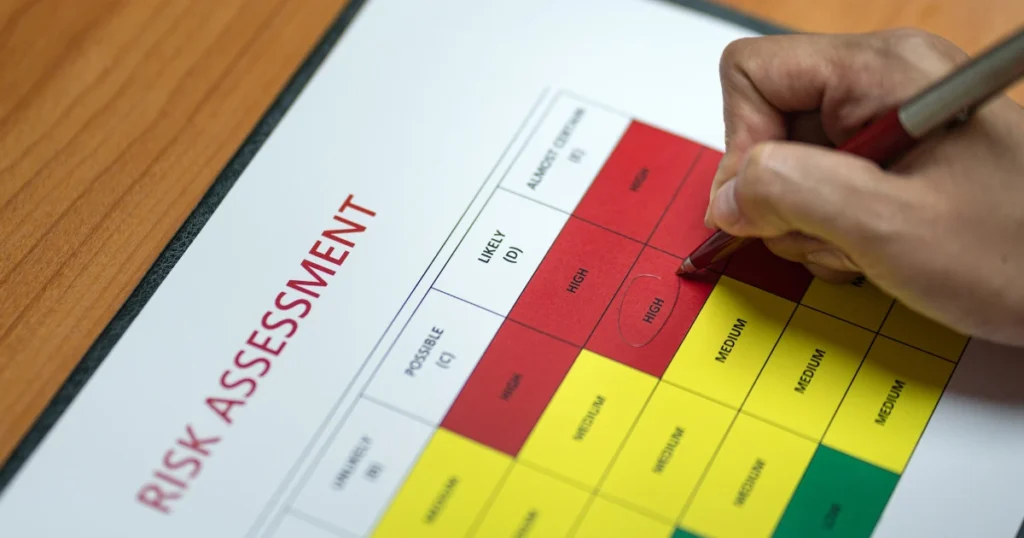
1. Assess Risks Based on Likelihood and Impact
Identify potential problems in financial reporting, operations, information security, and regulatory compliance. Rate each risk according to its likelihood and possible impact.
A risk register can record the issue, risk rating, existing controls, responsible employee, and planned response. Update it when business activities or applicable requirements change.
2. Strengthen Controls and Maintain Audit Evidence
Establish clear approval limits, separate incompatible duties, reconcile accounts regularly, and restrict access to sensitive systems. Keep relevant invoices, contracts, training records, inspection results, and financial documents organised.
The COSO Internal Control Framework guides the design of controls that support reliable reporting, effective operations, and compliance.
3. Correct Findings and Address Root Causes
When an audit identifies a weakness, don’t just fix the problem at hand; look for the root cause. Assign responsibility, set a deadline and record corrective action.
For example, an internal audit could reveal that a service company based in Doha lacks employee training records. Management could update the training register, assign responsibility for maintaining it and check the records for completeness. A follow-up check would find out if the corrective action had corrected the problem.
4. Monitor Improvements Through Regular Reviews
Monitor overdue corrective actions, recurring findings and open high-risk issues. Businesses that conduct regular management reviews can identify failing controls before they become a pandemic.
Qatar’s Commercial Companies Law, Article 145, sets out auditor duties for companies covered by its provisions, including examining accounts and relevant financial and administrative systems. Businesses should obtain qualified advice to confirm which statutory requirements apply to their circumstances.
How Qualitas Consulting Can Support ISO Audit Readiness
Preparing for an ISO audit requires more than organised paperwork. Businesses need effective procedures, clear responsibilities, and evidence that their management systems meet the relevant standard.
Qualitas Consulting provides ISO consultancy, internal auditing, gap analysis, training, and certification support. These services can help organisations identify management system gaps, improve documentation, and prepare for assessments.
A gap analysis highlights areas that need attention before a formal audit. Internal audits then help businesses evaluate whether corrective actions have worked and whether their processes continue to meet applicable requirements.
For statutory financial statement audits, businesses should engage an appropriately qualified independent auditor. ISO consultancy and financial auditing serve different purposes.
Identify hidden risks with Qualitas internal auditing services.
Conclusion
Managing audit risks requires good records, effective controls, and timely corrective action. Qatar businesses can improve their compliance and operational performance by identifying their weaknesses and making sure they meet the requirements that are relevant to their activities.
Professional guidance can also help organisations strengthen their management systems and maintain stakeholder confidence.
FAQs
What is an acceptable audit risk?
Adequate audit risk is the risk that an auditor is prepared to take when issuing an incorrect opinion on materially misstated accounting information. This risk must be lowered to an appropriate level; there is no universal number for all audits.
What are the different types of audit risks?
There are three types of risk: inherent risk (the possibility of errors occurring naturally), control risk (failures of internal control to prevent or detect errors), and detection risk (audit procedures failing to detect errors that do exist).
What are examples of risk audits?
Examples include financial audits, internal control audits, compliance audits, operational audits, and information security audits. They assess risks such as financial misstatements, weak controls, regulatory breaches, inefficient processes, and data security gaps.