
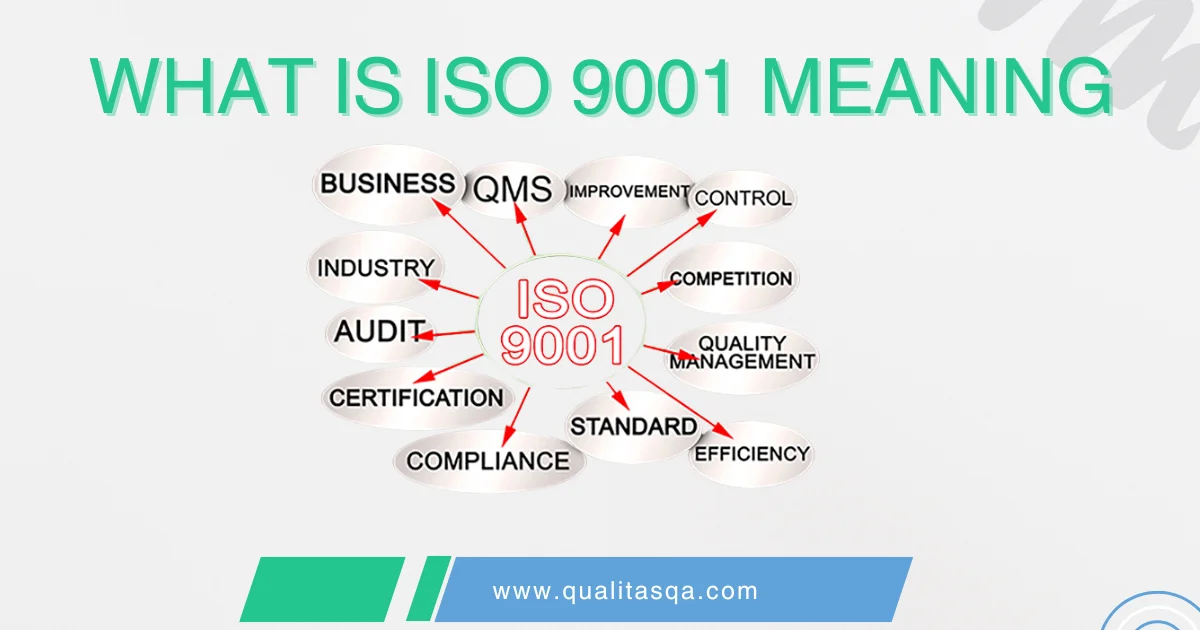
Quality isn’t optional; it’s a competitive edge. Understanding the ISO 9001 meaning can transform how a Qatar business operates, enabling it to compete not only locally but on a global scale. ISO 9001 is the world’s most recognised Quality Management System (QMS) standard, with over 1.2 million certificates issued worldwide, showing how widely organisations trust its structure and benefits.
This international quality standard drives measurable improvements in efficiency, customer satisfaction and operational consistency by embedding principles such as risk-based thinking, the Plan-Do-Check-Act (PDCA) cycle and evidence-based decision making into daily operations.
Certified organisations often report over 15% productivity gains and up to 20% operational cost reductions, thanks to streamlined processes and better quality control.
For Qatar businesses ready to elevate quality and performance, partnering with Qualitas Consulting ensures smooth ISO 9001 implementation and audit success. Contact us today to get started.
Explore how our ISO 9001 consulting services supportfaster compliance and real performance gains.
What Is ISO 9001 Meaning and How Does It Define a Quality Management System (QMS)?
ISO 9001 explains how an organisation should plan, control, monitor and improve its processes to deliver consistent results. The current ISO 9001:2015 standard focuses on how work actually flows inside your organisation rather than how documents look on paper. It promotes stability, accountability and clarity.
A Quality Management System (QMS) is the framework that connects people, processes and performance. Instead of relying on individual effort, the system ensures results remain consistent even when staff change or the business grows. ISO 9001 requires organisations to understand their organisational context, identify interested parties and align quality objectives with strategic direction.
According to the latest ISO Survey, ISO 9001 remains the most widely implemented management system standard worldwide, with more certificates issued than any other standard, highlighting its dominant role in modern quality frameworks.
How ISO 9001 Shapes a Practical QMS
ISO 9001 defines a QMS using several core elements:
- Clear quality objectives linked to business goals and customer requirements
- Defined process interaction so departments work together, not in silos
- Built-in risk-based thinking to prevent failures before they occur
- Strong monitoring and measurement using data, not assumptions
- Regular internal audit and management review for control
This structure turns quality into a living quality improvement system. In Qatar, many organisations also use ISO 9001 as the base for management system integration, combining quality with safety or information security standards.
Learn how our ISO 9001 implementation approach delivers clarity and control.
Why Is ISO 9001 Important for Businesses Operating in Qatar?
Qatar’s business environment demands reliability, transparency and compliance. ISO 9001 Certification in Qatar provides clear evidence that your organisation follows recognised quality management standards.
Beyond certification, ISO 9001 strengthens internal discipline. Processes become repeatable. Decisions rely on evidence-based data. Teams understand their responsibilities clearly.
Key Reasons ISO 9001 Matters in Qatar
- Supports regulatory compliance and tender eligibility
- Builds trust with government entities and international clients
- Improves operational efficiency and reduces waste
- Enhances customer retention through consistent service
For companies seeking global quality certification, ISO 9001 acts as a universal language of trust and professionalism.
What Are the Core ISO 9001 Requirements Companies Must Meet in Qatar?
The ISO 9001 requirements define what certification bodies expect to see during audits. These requirements are flexible but must be implemented effectively. A study by BSI Group shows that companies implementing ISO 9001 often experience up to a 50% reduction in process failures within the first year due to better controls.
Core Requirements Explained
- Establishing documented processes for key activities
- Applying risk management across operations
- Setting measurable quality objectives and KPIs
- Conducting monitoring and measurement of performance
- Managing corrective actions and preventive actions
- Maintaining records for audits and reviews
These requirements ensure that quality control and monitoring become part of daily operations. In Qatar, auditors focus on real implementation, not theoretical compliance.
Unsure how ISO 9001 requirements apply to your organisation?We guide you through every clause with practical examples and audit-ready documentation.
What Are the Key Principles of ISO 9001 Certification in Qatar?
ISO 9001 is built on principles that guide how organisations think and act. These principles shape a performance-based quality system. According to ISO itself, organisations that embrace quality principles see improved leadership alignment and clearer process interaction, often resulting in over 30% fewer customer complaints.
ISO 9001 Quality Principles
- Customer focus and customer satisfaction improvement
- Leadership commitment and accountability
- Process approach for operational consistency
- Continuous improvement using the Plan-Do-Check-Act (PDCA) cycle
- Data-driven decisions through performance measurement
- Strong relationship management with suppliers
Together, these principles improve internal process efficiency and support long-term stability.
Who Can Apply for ISO 9001 Certification in Qatar?
ISO 9001 applies to all organisations, regardless of size or sector. Startups, SMEs and large enterprises can all benefit from QMS certification in Qatar. A survey by Statista shows that quality standards like ISO 9001 are implemented across manufacturing, IT, healthcare and service sectors, with service industries accounting for over 40% of total certificates globally.
Common Sectors Seeking Certification
- Construction and infrastructure
- Healthcare and medical services
- IT and technology firms
- Manufacturing and food production
- Logistics, transport and warehousing
- Education and training providers
ISO 9001 also supports sector-specific standards, including automotive, aerospace and medical industries, helping organisations meet international expectations.
What Is the ISO 9001 Certification Process in Qatar, Step by Step?
The ISO 9001 certification process follows a structured path designed to reduce risk and improve readiness.
Typical Certification Stages
- Gap analysis against ISO 9001:2015
- System design and documentation
- ISO 9001 implementation across departments
- Internal audit and corrective actions
- Management review
- Certification audit by an accredited Certification Body
Working with an experienced ISO consultant in Qatar simplifies documentation, training and audit preparation.
What Are the Benefits of ISO 9001 Certification for Qatar Businesses?
The ISO 9001 benefits extend beyond compliance. Certification improves how your business performs every day.
Business Benefits You Can Expect
- Improved organisational efficiency
- Better business process optimization
- Reduced errors and rework
- Stronger customer acquisition opportunities
- Enhanced business growth and scalability
Certified organisations operate with clarity, discipline and confidence.
What Is the ISO 9001 Certification Cost in Qatar and What Factors Affect It?
The ISO certification cost in Qatar varies based on organisational needs. There is no fixed price.
Cost Influencing Factors
- Number of employees
- Process complexity and risk level
- Existing system maturity
- Scope of certification
- Certification body selection
Although certification requires investment, returns often appear through enhanced profitability and improved productivity.
How Can Qualitas Consulting Simplify ISO 9001 Compliance in Qatar?
Qualitas Consulting provides end-to-end support for ISO certification in Qatar, focusing on clarity and results.
Why Businesses Choose Qualitas Consulting
- Expertise across multiple international quality standard frameworks
- Practical, tailored documentation
- Strong audit readiness support
- Ongoing post-certification guidance
- Deep understanding of Qatar’s regulatory environment
Our approach helps organisations achieve compliance with ISO standards while building systems that last.
Ready to get started? Speak with our ISO experts today and move forward with confidence.
Conclusion: Understanding ISO 9001 Meaning for Long-Term Success
Understanding the ISO 9001 meaning can assist Qatar companies in their transition to non-reactive management to properly designed, performance-based business processes. ISO 9001 promotes uniformity, responsibility and factual decision making in every process.
It allows organisations to achieve efficiency, match regulatory requirements and customer satisfaction without undue complexity. More to the point, it offers a growth base at both local and global levels. Properly designed quality systems provide business value that is measurable outside certification.
Working with experienced consultants like Qualitas Consulting ensures ISO 9001 is implemented as a practical management tool, not just a compliance requirement.
FAQs
ISO 9001 certification demonstrates that a company adheres to a systematic quality framework, increases customer satisfaction, decreases mistakes and functions steadily to achieve international quality requirements.
Documented information that ISO 9001 requires includes quality policy, quality objectives, scope of the QMS, process records, internal audit findings and management review reports.
ISO 9001 is an international standard, which assists companies to structure their operations in such a way that they produce their goods or services, maintain the same quality and progress with time.
It implies that an external certification authority has confirmed that the company adheres to an effective Quality Management System and complies with ISO 9001 standards.
The ISO 9001 certification lasts three years, and there is a need to carry out an annual surveillance audit as a means of ensuring compliance.
The price of ISO 9001 varies with the size, complexity and scope of companies, but generally covers consultancy, training and certification audit expenses.